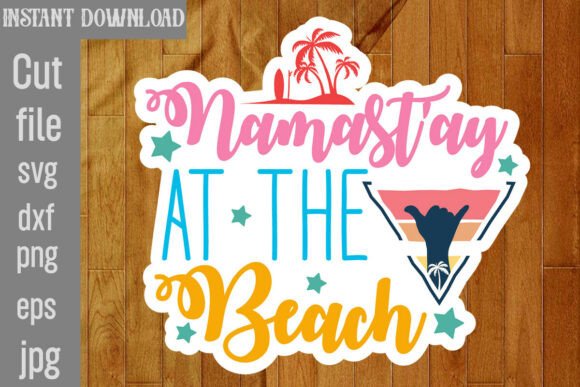
Namast ay at the Beach SVG: A Designer's Review
As a designer who spends more time staring at stitch simulations than actual sunsets, I approach new design assets with a critical eye. When I first opened the Namast ay at the Beach SVG Cut File, my immediate reaction wasn't just about the summer vibe; it was about feasibility. We have all been there: you buy a cute graphic, load it into your software, and realize the lines are too thin for satin stitch or the details will vanish on a textured towel. This review breaks down how this specific file holds up when moved from a digital screen to a tangible handmade product.
First Impressions and Visual Personality
The mood of this design is instantly recognizable. It captures that laid-back, coastal spirit without feeling cliché. The layout suggests a balance between typography and illustrative elements, which is crucial for embroidery. In the world of Crafts and Graphics, many files look great as flat prints but fail miserably when translated into thread. The "Namast ay" theme implies a connection between mindfulness and leisure, a popular niche for boutique apparel.
Visually, the shapes appear bold enough to handle conversion into a machine embroidery design. However, because this is provided as an SVG, DXF, EPS, PNG, and JPEG, the burden of digitizing—or verifying the digitization if you are using a pre-made embroidery file version—falls on you. If you are converting this SVG yourself, pay close attention to the curves. Smooth vectors in Illustrator do not always translate to smooth satin columns in your embroidery software. You may need to adjust node points to prevent thread bunching, especially around any circular or wave-like motifs associated with the beach theme.
Real-World Application: The Summer Tote Scenario
To truly test the potential of the Namast ay at the Beach SVG Cut File, I imagined a specific client project: a custom embroidered tote bag for a local yoga studio's summer retreat. This is a classic use case for Etsy sellers and small shop products. The goal was to create something durable yet stylish that could withstand sand, sunscreen, and frequent washing.
For a tote bag design, the scale of the artwork is paramount. This design seems versatile enough to be scaled up for a large canvas tote or scaled down for a zipper pouch. When visualizing the finished product, I considered the stitch types. The text elements would likely require a clean satin stitch to maintain readability, while any graphical icons (like suns, waves, or lotus flowers) might benefit from a fill stitch to add texture. If you are aiming for an applique design look, this SVG is perfect for cutting fabric shapes to layer onto the bag, adding a tactile dimension that flat stitching cannot achieve.
Customer reaction to such a piece would likely be positive, provided the execution is clean. The "Namaste" element adds a personal, spiritual touch that elevates the item from a simple bag to a meaningful personalized gift. For a craft business, this kind of thematic consistency builds brand trust. Clients want to know that their custom apparel or accessories will look professional, not like a hobbyist experiment gone wrong.
Navigating Fabric Challenges and Stitch Density
While the design is charming, practical application requires caution. Not every fabric is ready for this level of detail. If you plan to use this on a sweatshirt embroidery project, the fleece texture can swallow small details. You must evaluate the stitch density. If the digital file suggests dense coverage, it might cause the fabric to pucker, ruining the drape of the garment. On stretchy fabrics like t-shirts or baby clothes, a heavy fill stitch can make the material stiff and uncomfortable.
For baby embroidery, softness is non-negotiable. If you adapt this design for a onesie, consider using a lighter fill or even a running stitch outline to keep the hand feel gentle against sensitive skin. Similarly, when working on curved surfaces like caps, the layout of the text becomes critical. Arched text can be tricky; if the letters are too close together, they will merge during stitching. Always check the spacing in your digitizing software before hooping.
Dark fabrics present another challenge. The vibrant colors implied by the "summer" theme need high contrast to pop. If stitching on navy or black, ensure your thread colors are bright enough to stand out. A mockup in black and white can help you determine if the design relies too heavily on color differentiation rather than shape definition. If the design loses its identity without color, it may not be suitable for monochromatic projects.
Maximizing Value for Commercial Projects
For commercial embroidery professionals, the value of a design lies in its reliability. A design that stitches out cleanly every time saves money on wasted materials and time. The Namast ay at the Beach SVG Cut File offers flexibility across various formats, which is a plus for creating printable mockups for online listings before you even stitch a single thread. Being able to show a customer a realistic preview on an apron or pillow cover can significantly boost buyer engagement.
However, before listing this as a digital embroidery file or selling finished goods, you must verify the licensing terms. The product description mentions it is a zip file with multiple formats, but it does not explicitly state the commercial rights for the embroidery conversion. Always confirm whether the license allows for selling physical items made with the design or if it is restricted to personal use. This step is vital for maintaining professionalism and avoiding legal issues down the line.
Practical Designer Notes for Success
To ensure the best results with this design, follow these practical steps:
- Test on Scrap First: Never run a new design on a final product without a test stitch-out on similar fabric.
- Check Stabilizer: Match your stabilizer to the fabric weight. Heavy designs on light fabric require cut-away stabilizer to prevent sagging over time.
- Review Hoop Size: Confirm the design fits within your available hoop sizes. If it is too large, you may need to split the design or resize it, which affects stitch integrity.
- Inspect Small Details: Zoom in on tiny lettering or thin lines. These are the first areas to fail if the digitizing isn't optimized for thread.
- Contrast Check: Verify that your chosen thread colors provide sufficient contrast against the base fabric, especially for the text elements.
- Wash Testing: If the final product is intended for frequent washing, like a kitchen towel or gym bag, wash the test sample to check for thread breakage or puckering.
In conclusion, the Namast ay at the Beach SVG Cut File has strong potential for creating appealing summer-themed goods. Its success, however, depends entirely on the skill of the maker to adapt the vector data into a robust embroidery format. By respecting the limitations of fabric and thread, and by thoroughly testing before production, you can turn this digital asset into a standout holiday embroidery piece or a best-selling item in your online shop. Whether for a wedding gift, a boutique launch, or a fun weekend project, this design invites creativity—but demands precision.