Reviewing Bless My Blooms SVG for Embroidery
As a designer who spends half my life staring at digitizing software and the other half wrestling with hoop tension, I have learned to be skeptical of generic floral designs. The market is flooded with them. However, when I pulled up Bless My Blooms SVG Cut File, I paused. There is a distinct difference between a graphic that looks pretty on a screen and one that translates well into thread. This review comes from the perspective of someone who needs to know if this asset will hold up in a real-world embroidery project, not just as a digital placeholder.
First Impressions: Mood and Visual Personality
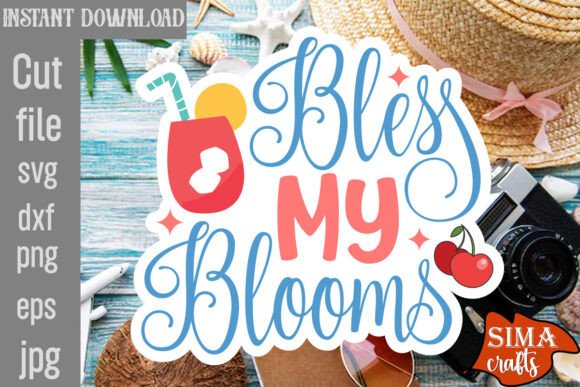
The immediate vibe of this design is unapologetically summer. It feels vibrant and color-filled, which is exactly what you want when trying to capture the spirit of the season. From a layout perspective, the composition balances organic shapes with a structured flow. For an embroidery designer, this is crucial. Chaotic layouts often lead to excessive jump stitches or confusing color changes. Here, the visual personality suggests a design that is meant to be seen. It does not hide in the background; it demands attention.
When evaluating Crafts and Graphics for commercial use, I look for versatility. Does this feel like a niche item, or can it cross over? The "bloom" theme is perennial, but the specific styling here leans toward modern handmade aesthetics. It fits neatly into the current trend of bold, cheerful home decor and apparel. It creates a mood of warmth and hospitality, making it an ideal candidate for items intended to bring joy to the recipient.
Real-World Application: The Tote Bag Test
To truly judge a design, you must imagine it stitched. I recently worked on a custom order for a local boutique needing a signature tote bag design. The client wanted something that screamed "summer market." I visualized Bless My Blooms SVG Cut File centered on a heavy canvas tote. The result in my mind’s eye was strong. The shapes are substantial enough to handle the texture of canvas without getting lost.
If you are an Etsy seller or run a small shop product line, consider the scale. This design would excel on larger surfaces. Think about sweatshirt embroidery on the back of a crewneck, or perhaps as a large focal point on a pillow cover. The vibrancy mentioned in the product description suggests that this design relies on color contrast. On a neutral linen or a crisp white cotton, the threads would pop, creating a high-value handmade product that feels curated rather than mass-produced.
Beyond the Tote: Apparel and Home Decor
Let us expand the scope. How does this perform on custom apparel? For a baby embroidery project, such as a onesie or a burp cloth, you must be cautious. If the design includes tiny details, they may not stitch out cleanly on small hoops. However, if scaled appropriately, it could work beautifully on a toddler’s summer dress. For holiday embroidery, particularly for spring or summer gifts, this serves as a versatile digital embroidery file that can be adapted for Easter baskets or Mother’s Day personalized gift sets.
In the realm of home goods, imagine this on a kitchen towel. A running stitch outline with a light fill stitch interior could create a textured, rustic look. Alternatively, using a dense satin stitch border would give it a more polished, boutique finish. The choice of stitch type will dramatically alter the final appearance, so understanding your machine’s capabilities is key.
Technical Considerations for Stitching
Here is where the rubber meets the road. While the product description highlights formats like SVG, DXF, EPS, PNG, and JPEG, we need to talk about embroidery specifics. As a reviewer, I must note that SVGs are vector files primarily used for cutting machines (like Cricut or Silhouette) or print-on-demand services. They are not native machine embroidery files (like PES or DST).
Crucial Designer Note: If you are planning to stitch this, you cannot simply load an SVG into your embroidery machine. You must either use the provided PNG/JPEG as a reference for manual digitizing or check if the creator offers a converted embroidery-specific format. If you are digitizing it yourself from the vector shapes, pay close attention to stitch density. Floral designs can become bulky if every petal is filled heavily. I recommend using a combination of satin stitches for outlines and lighter fill stitches for the centers to keep the fabric from puckering.
Fabric and Stabilizer Choices
The success of this design depends heavily on your material choices. For fabric texture, avoid highly textured fabrics like thick wool or loose-weave linen unless you use a strong cut-away stabilizer. The design’s clarity relies on clean lines. On stretchy fabrics, such as jersey knits for t-shirts, ensure you hoop securely with a tear-away stabilizer to prevent distortion. If you are working on dark fabric, test your thread colors first. The "vibrant" nature of the design means it likely uses bright hues; ensure they have enough contrast against the background to remain visible.
Be wary of curved surfaces like caps. If you attempt to place this on a hat, break the design into smaller sections or simplify the details. Complex curves in floral designs can cause thread breaks or nesting if the hoop size is too small or the curvature is too aggressive.
Commercial Viability and Brand Consistency
For commercial embroidery professionals and creative entrepreneurs, the question is always about value. Does this design elevate the perceived worth of the item? Yes, if executed well. A clean, vibrant floral design signals quality. It builds customer trust because it looks intentional and professional. When used in printable mockup previews for your online store, ensure the lighting matches the vibrancy of the actual threads. Misleading previews lead to returns.
This asset fits well within a broader collection of design assets for spring and summer collections. It allows for brand consistency if you pair it with complementary fonts or simpler geometric shapes. For craft business owners, this can be a staple item. It is not overly trendy, meaning it will not look dated in six months. It has a classic appeal that supports long-term sales.
Practical Designer Notes for Best Results
Before you commit to a full production run or list this on your shop, follow these steps:
- Test on Scrap Fabric: Always stitch a sample on the exact fabric you plan to use. Check for puckering or thread breaks.
- Check Thread Contrast: View your design in black and white. If the details disappear, you need higher contrast between your thread and fabric.
- Verify Licensing: The product description mentions various file formats but does not explicitly detail commercial licensing terms for embroidered finished goods. Confirm with the seller whether you can sell physical items made with this design.
- Inspect Small Details: Zoom in on the vector file. Are there tiny anchor points that might cause needle jumps? Simplify if necessary.
- Hoop Size Confirmation: Ensure the design fits your standard hoops. If it requires a 5x7 or 6x10 hoop, make sure your machine supports it.
In conclusion, Bless My Blooms SVG Cut File is a promising asset for designers who understand the translation from screen to stitch. It offers a vibrant, summery aesthetic that works well for tote bags, apparel, and home decor. However, its success lies in your technical execution. Respect the fabric, choose your stabilizer wisely, and verify your file compatibility. When done right, this design can become a standout piece in your finished product lineup, delighting customers with its cheerful, professional appearance.