Teacher Half Leopard SVG: A Designer’s Review
As a designer who spends more time staring at stitch simulations than I care to admit, I have learned that not every digital file translates well to thread. We live in an era where Crafts and digital design intersect constantly, but the gap between a crisp vector on a screen and a tangible finished product is where the real work happens. Recently, I evaluated the Teacher Half Leopard SVG Sublimation bundle to see if it holds up under the scrutiny of real-world application. This isn’t just about downloading a file; it is about understanding how a graphic behaves when it meets fabric, hoop, and needle.
First Impressions and Visual Personality
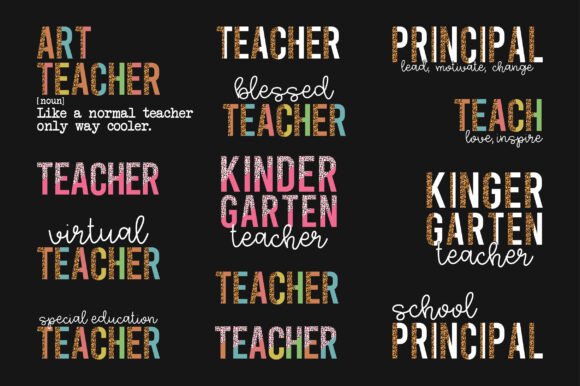
The moment I opened the files, the duality of the design caught my eye. The "half leopard" concept is a popular trend in Graphics, blending organic animal print with solid or contrasting elements. For a teacher-themed design, this strikes a balance between professional approachability and playful style. The layout feels intentional, with clean lines that suggest it was created with versatility in mind. The mood is modern and chic, moving away from the overly cartoonish aesthetics often found in educational decor. It feels like something a contemporary educator would actually want to wear or display, rather than a generic clip-art compromise.
What stands out immediately is the potential for customization. The description notes that the colors are easy to change, which is critical for us. In embroidery, we are rarely stuck with default black and white. I envision this design in school colors, soft pastels for spring collections, or bold primaries for back-to-school rushes. The visual personality is adaptable, allowing it to fit into various branding schemes without losing its core identity.
Real-World Application: The Custom Tote Scenario
To truly test the viability of the Teacher Half Leopard SVG Sublimation, I mentally walked through a specific project: a custom canvas tote bag for a kindergarten teacher’s end-of-year gift. This is a common request for Etsy sellers and small shop products. The tote requires a design that is visible from a distance but detailed enough to look premium up close.
In this scenario, the half-leopard motif works exceptionally well as a central focal point. If I were digitizing this for machine embroidery, I would likely treat the leopard print section as a fill stitch area, using varied thread directions to mimic the texture of fur, while keeping the other half as a solid satin stitch or a clean applique edge. The contrast between the textured fill and the smooth solid creates visual interest that flat printing cannot achieve. For a handmade product, this textural difference adds perceived value. Parents buying a personalized gift are looking for that tactile quality that screams "custom," and this design facilitates that beautifully.
Versatility Across Product Lines
Beyond totes, this design shines in custom apparel. Imagine it embroidered on the left chest of a teacher’s cardigan or across the back of a sweatshirt embroidery project. The scale of the SVG allows it to be resized without losing integrity, making it suitable for smaller items like pencil pouches or larger statements like pillow covers. For baby embroidery projects, such as a nursery decor piece for a teacher’s classroom reading nook, the soft curves of the leopard spots can be rendered in gentle tones, creating a welcoming atmosphere.
It also serves well as an embroidered patch. Patches are trending in boutique branding, and this graphic’s clear boundaries make it ideal for cutting and applying. Whether used for holiday embroidery gifts or everyday craft business inventory, the design’s structure supports multiple production methods.
Technical Considerations and Stitching Challenges
While the aesthetic is strong, a responsible designer must address the technical hurdles. The Teacher Half Leopard SVG Sublimation is primarily a sublimation graphic, meaning it is optimized for heat transfer printing. Using it for embroidery requires careful digitization. You cannot simply auto-digitize a complex leopard print and expect good results. The stitch density must be managed to prevent puckering, especially on lighter fabrics.
When working with textured fabrics or stretchy fabric like jersey tees, the density of the leopard spots could cause distortion if not properly stabilized. I strongly advise using a cut-away stabilizer for garments that will be washed frequently. For caps or curved surfaces, the design needs to be narrowed slightly to account for the curvature, ensuring the leopard pattern doesn’t stretch unnaturally over the seam.
Another consideration is thread colors. Leopard print relies on subtle gradients. In embroidery, we simulate this with thread changes. A skilled digitizer will need to break the print area into manageable color blocks. If you are selling this as a digital embroidery file, ensure you provide a version with reduced color complexity for home machines, or clearly state that it is intended for commercial multi-needle machines if the detail is high.
Navigating Fabric and Hoop Constraints
Be cautious with small hoop sizes. If you attempt to shrink this design too much for a keychain or small pocket, the details of the leopard spots may merge, losing definition. Always test the design on scrap fabric first. Check how the running stitch outlines hold up against the fill. On dark fabric, you may need to add an underlay or use lighter thread colors to ensure the design pops, whereas on light fabrics, darker threads will provide the necessary contrast.
For commercial embroidery projects, consistency is key. If you are producing fifty units for a school staff, ensure your digitizing settings are locked in to prevent variation between hoops. The applique design route might be safer for large runs, using a leopard-print fabric for the spotted half and a solid fabric for the other, stitched down with a satin border. This reduces stitch count and production time while maintaining the visual impact.
Enhancing Brand Value and Customer Trust
Using a well-thought-out design like Teacher Half Leopard SVG Sublimation elevates your brand. It shows that you are current with design trends but also respectful of the craft. When customers see a clean, well-executed embroidery job, their trust in your craft business grows. It moves your items from commodity goods to cherished keepsakes.
For printable mockup creation, this design offers excellent visual appeal. The contrast allows for striking promotional images that stop the scroll on social media. Whether you are creating design assets for your own shop or licensing the work, the professionalism of the graphic reflects on your business. It encourages buyer engagement because it looks polished and intentional.
Practical Designer Notes for Success
Before you launch this design into your embroidery project lineup, take these practical steps:
- Verify Licensing: The product description mentions AI, EPS, SVG, and PNG files. Confirm whether the license allows for commercial use of the embroidered finished items. Most SVG bundles do, but always read the fine print.
- Test Stitch Density: Digitize a sample and stitch it out. Check for pulls or gaps. Adjust the density if the fabric puckers.
- Check Color Contrast: View your design in black and white. If the details disappear, you need to adjust your thread choices or digitizing strategy.
- Confirm Hoop Size: Ensure the design fits comfortably within your standard hoops with room for stabilization.
- Inspect Small Details: Zoom in on the edges of the leopard spots. Smooth out any jagged vectors before digitizing to ensure clean stitch paths.
In conclusion, the Teacher Half Leopard SVG Sublimation is a versatile and stylish asset for the modern maker. With careful digitizing and attention to fabric choice, it transforms from a simple graphic into a high-value embroidered product. It respects the intelligence of the wearer and the skill of the creator, making it a worthy addition to any serious Crafts portfolio.